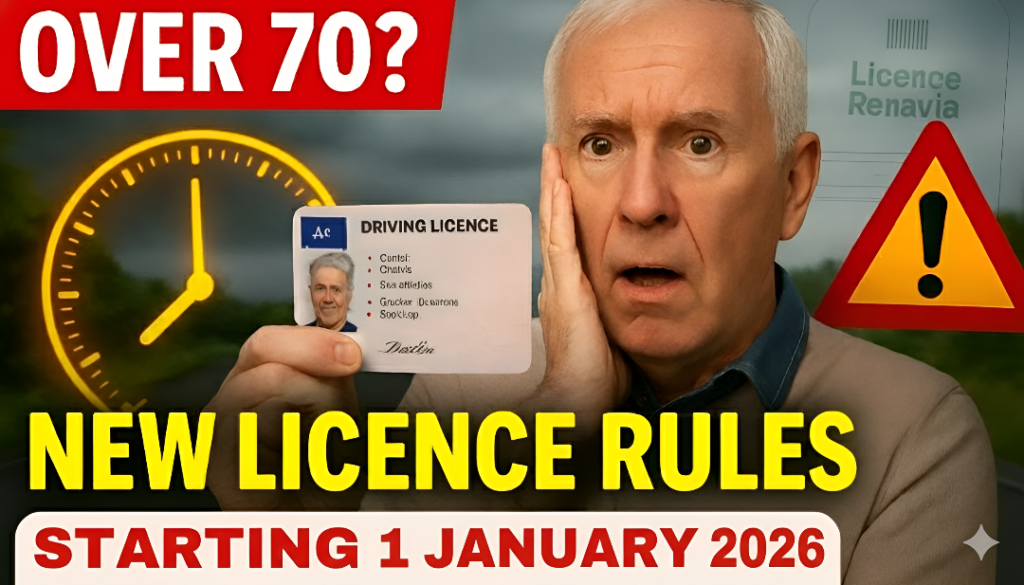
The UK Government has officially confirmed updated driving licence rules for drivers aged over 70, which will come into effect from 5 January 2026. These changes have attracted significant public attention, especially among senior citizens who rely on driving for independence, social engagement, and daily activities. Many older drivers initially feared that the update could result in an automatic driving ban. However, the government has clearly stated that there is no age-based ban. Instead, the revised rules focus on medical fitness, regular licence renewal, and improving overall road safety, while still protecting the independence of responsible senior drivers.
Why the UK Government Updated Driving Licence Rules for Over-70s
The decision to update driving licence rules is linked to the UK’s ageing population and the increasing number of older drivers on the road. Advances in healthcare have enabled people to stay active well into later life, but age-related changes such as slower reflexes, weaker eyesight, or long-term health conditions can gradually affect driving ability. The government believes that regular licence renewal combined with medical self-declaration is a balanced approach that promotes road safety without unfairly discriminating against elderly drivers.
Is There a Driving Licence Ban for Over-70s in the UK?
There is no nationwide driving licence ban for people aged over 70 in the UK. Age alone does not disqualify someone from driving. Senior drivers can legally continue driving as long as they meet DVLA medical and safety requirements. Much of the confusion arises when licences expire at age 70 due to non-renewal. This expiry is often mistaken for a ban, but it is simply a legal requirement that applies to all drivers once they reach this age.
New Driving Licence Rules Effective from 5 January 2026
From 5 January 2026, the updated rules reinforce existing requirements with a stronger focus on medical honesty and fitness to drive. Drivers aged 70 and above must renew their driving licence every three years and submit a medical self-declaration confirming that they are safe to drive. Although the renewal process remains free of charge, providing false or misleading medical information may lead to licence cancellation, fines, or legal consequences.
Driving Licence Renewal Process After Age 70
Renewing a driving licence after turning 70 is designed to be simple and accessible. Drivers can renew online through the official GOV.UK website or apply by post. The process includes confirming personal details, providing a National Insurance number, and completing a medical self-declaration form. Once approved, the renewed licence is normally valid for three years, after which it must be renewed again to continue driving legally.
Medical Conditions That Must Be Declared by Over-70 Drivers
Drivers over 70 are legally required to declare any medical condition that could affect safe driving. These include heart disease, epilepsy, insulin-treated diabetes, neurological disorders, sleep-related conditions, serious mental health issues, and eyesight problems. In some cases, the DVLA may request additional medical evidence from a GP or specialist. Failure to declare relevant medical conditions can invalidate insurance and may result in penalties.
Eyesight Rules for Drivers Over 70
Eyesight standards are a critical part of licence renewal after age 70. Drivers must be able to read a standard vehicle number plate from a distance of 20 metres and maintain adequate visual clarity while driving. Poor eyesight is one of the most common reasons for licence restrictions among older drivers. Regular eye tests and updated prescriptions are strongly recommended to meet DVLA requirements.
Can the DVLA Cancel a Licence After Age 70?
Yes, the DVLA has the authority to cancel or suspend a driving licence at any age if a driver is found medically unfit. For drivers over 70, such decisions are based on medical evidence rather than age alone. In some situations, the DVLA may issue a short-term licence valid for one or two years instead of the usual three-year licence, allowing closer monitoring while still permitting driving.
What Happens If You Do Not Renew Your Licence at 70?
If a driver fails to renew their licence after reaching age 70, the licence automatically expires. Driving with an expired licence is illegal and may lead to fines, penalty points, and invalid car insurance. This situation is often incorrectly described as a driving ban, but it is simply the result of missing the renewal deadline.
Will Over-70 Drivers Need a Driving Test Under the New Rules?
Under the new rules effective from 5 January 2026, there is no mandatory driving test introduced solely because of age. Drivers over 70 are not required to retake a practical or theory test unless the DVLA identifies serious medical or safety concerns. In specific cases, further assessments may be requested, but most healthy senior drivers will continue renewing their licences without re-testing.
How Insurance Companies View Over-70 Driving Rules
Insurance companies closely follow DVLA licence rules, especially for drivers over 70. If a licence has expired or medical conditions are not properly declared, insurance cover may become invalid. However, drivers who renew on time and comply with medical disclosure requirements generally continue to receive coverage without difficulty.
How the New Rules Affect Daily Driving for Seniors
For most healthy senior drivers, the updated rules will not significantly affect daily driving. Activities such as shopping, visiting family, attending medical appointments, and social outings can continue as normal. Restrictions usually apply only when medical concerns arise, ensuring safety without unnecessary loss of independence.
How DVLA Reviews Medical Fitness in Serious Cases
In cases where a medical condition raises safety concerns, the DVLA may carry out a detailed review that includes medical reports, specialist opinions, or driving assessments. These reviews are handled individually and confidentially, ensuring decisions are based on evidence rather than assumptions about age. This process helps balance public safety with fairness for older drivers who are still capable of driving.
Role of Families in Supporting Elderly Drivers
Family members can play an important role in supporting older drivers by reminding them about licence renewals, encouraging regular health checks, and discussing driving confidence. Where driving becomes unsafe, families can help explore alternative transport options while respecting the driver’s independence and dignity.
What Over-70 Drivers Should Do Now
Drivers aged over 70 or approaching that age should carefully track licence renewal dates and stay updated with DVLA guidance. Regular health and eyesight checks, along with honest medical disclosure, are essential. Consulting a GP about driving fitness can help avoid complications during renewal.
Conclusion
The UK Government-confirmed driving licence rules for over-70s, effective from 5 January 2026, do not introduce an automatic ban. Instead, they strengthen renewal requirements, medical declarations, and eyesight standards to improve road safety. Senior drivers who remain fit can continue driving legally and confidently, while those with health risks are assessed fairly based on medical evidence. Staying informed and renewing on time ensures continued independence and safe driving across the UK.