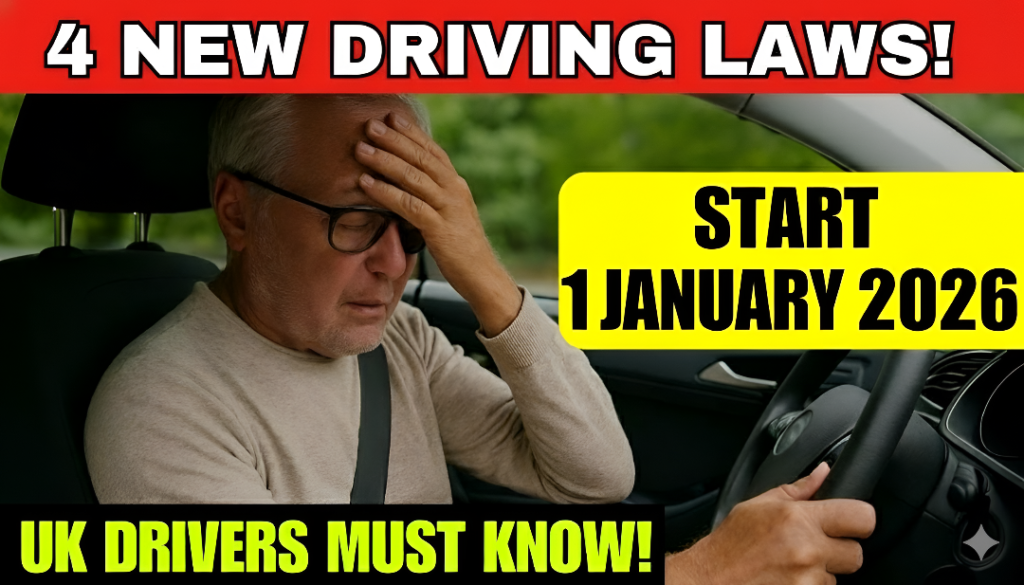
From 1 January 2026, the UK government is introducing several important changes to driving laws that will affect millions of motorists across the country. These updates are designed to improve road safety, reduce serious accidents, and address modern driving challenges such as mobile phone distraction, speeding, and repeat offences. Every UK driver should understand these changes clearly to avoid fines, penalty points, or licence issues.
Why UK Driving Laws Are Being Updated in 2026
The government decided to update driving laws after reviewing accident data, traffic behaviour trends, and safety reports from recent years. Authorities found that speeding, distracted driving, and repeat rule-breaking remain major causes of road accidents. The 2026 changes aim to strengthen enforcement, encourage responsible driving, and make UK roads safer for drivers, pedestrians, and cyclists.
1. Stricter Penalties for Speeding Offences
From 1 January 2026, speeding penalties will become tougher across the UK. Drivers caught exceeding speed limits may face higher fines linked to their income, more penalty points, and quicker licence suspension for repeat offences. Increased use of smart speed cameras and automatic monitoring systems means even brief speeding could now be detected more easily than before.
2. Tougher Mobile Phone Rules While Driving
The new driving laws introduce stricter action against mobile phone use while driving. Holding a phone for any reason—such as checking notifications, scrolling, or recording videos—can result in immediate penalties. Although hands-free systems remain legal, drivers may still be fined if phone use causes distraction or unsafe driving. The focus is on keeping drivers fully attentive on the road.
3. Stronger Action Against Repeat Driving Offences
Under the 2026 updates, repeat traffic offenders will face faster and harsher consequences. Accumulating penalty points will lead to licence suspension more quickly than before, even if offences are considered minor individually. This change is intended to discourage habitual rule-breaking and promote long-term responsible driving behaviour.
4. Greater Protection for Pedestrians and Cyclists
From January 2026, drivers must show increased caution around pedestrians and cyclists. Priority rules at junctions, crossings, and residential roads will be enforced more strictly. Failing to give way could result in fines, penalty points, or legal action. These measures aim to reduce injuries and fatalities among vulnerable road users, especially in busy urban areas.
How These Driving Law Changes Affect Everyday Drivers
For responsible motorists, daily driving may not feel very different. However, stricter enforcement means small mistakes may now lead to penalties. Drivers must follow speed limits carefully, avoid phone use completely, and remain alert at all times. Awareness and discipline will be key to avoiding unnecessary fines or licence problems.
What UK Drivers Should Do Before 1 January 2026
Drivers are advised to familiarise themselves with the updated rules well in advance. Checking licence status, understanding penalty point limits, and following traffic laws strictly can prevent future issues. Staying informed through official DVLA and government sources is the best way to prepare for these changes.
Government Advice for UK Drivers
The UK government has clarified that these law changes are not meant to punish responsible drivers but to improve overall road safety. Authorities encourage motorists to adapt early, drive responsibly, and stay updated with official guidance to avoid confusion or misinformation.
Conclusion
The 4 major driving law changes from 1 January 2026 mark a significant step toward safer UK roads. With tougher penalties, stricter enforcement, and stronger protection for vulnerable road users, drivers must be more careful and informed than ever. By understanding and following these new rules, UK motorists can continue driving legally, safely, and confidently in 2026 and beyond.