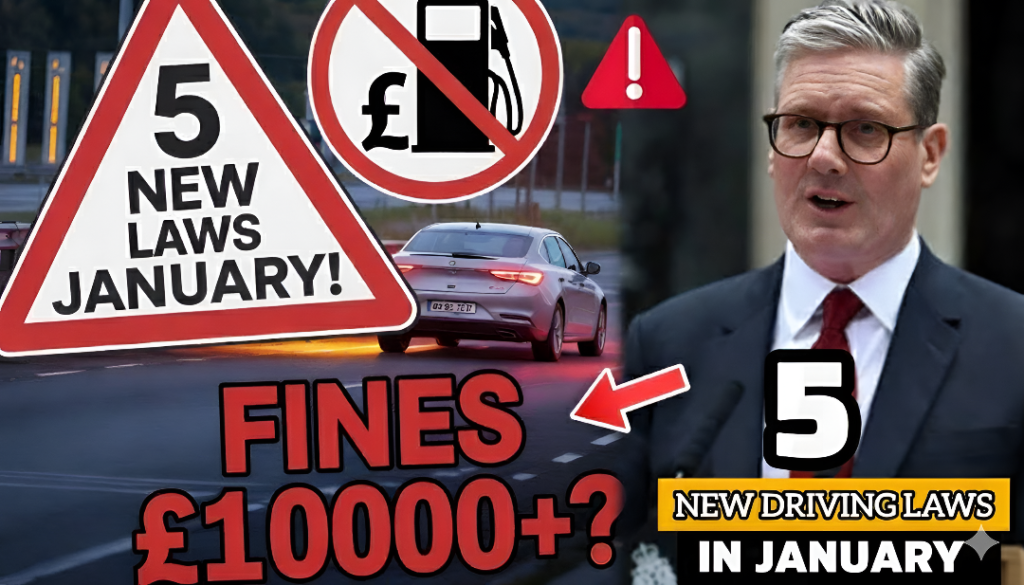
From January 2026, drivers across the United Kingdom will face several important changes as new driving laws officially come into force. These updates focus on fuel usage rules, stricter traffic fines, and major changes related to UK toll roads. The new laws aim to improve road safety, reduce emissions, and modernize transport infrastructure. Whether you are a daily commuter or an occasional driver, understanding these new rules is essential to avoid penalties and unexpected costs.
Fuel Usage Rules Change from January 2026
One of the most talked-about updates in the January 2026 driving laws is related to fuel usage and emissions. The UK government is tightening fuel regulations to reduce pollution and encourage cleaner driving habits. Older petrol and diesel vehicles may face additional restrictions in certain zones, while drivers of high-emission vehicles could see higher charges. These rules are designed to support the UK’s long-term environmental goals and push drivers toward fuel-efficient or low-emission alternatives.
Heavier Traffic Fines for Rule Violations
Drivers should prepare for increased fines under the new driving laws starting January 2026. Penalties for speeding, careless driving, mobile phone use, and ignoring traffic signals are expected to rise. Authorities believe stricter fines will act as a strong deterrent and improve overall road discipline. Even minor violations could result in higher financial penalties, making it more important than ever for drivers to follow traffic rules carefully.
UK Toll Road Charges Get a Major Update
Another major shock for drivers is the update to UK toll road charges. From January 2026, several toll roads, bridges, and tunnels may adopt revised pricing structures, including peak-hour charges. Some areas are also expected to introduce digital toll systems, removing cash payments entirely. Drivers who regularly use toll roads should stay alert, as failure to pay updated toll charges on time may result in automatic fines.
Environmental Zones and Clean Air Charges Expansion
From January 2026, several UK cities are expected to expand Clean Air Zones and environmental charging areas. Vehicles that do not meet updated emission standards may face daily charges or restricted access in urban centres. This change is particularly important for drivers of older vehicles, as non-compliant cars could become more expensive to use in city areas. The aim is to improve air quality while encouraging a shift toward cleaner vehicles.
Digital Monitoring and Enforcement Systems
The January 2026 driving law changes will also introduce more advanced digital monitoring systems. Smart cameras and automated enforcement tools will be used to detect speeding, toll violations, and emission rule breaches. These systems reduce human error and increase enforcement accuracy. As a result, drivers may receive penalties faster than before, sometimes without direct interaction with traffic police.
Changes to Penalty Points on Driving Licences
Along with higher fines, the new rules may also impact penalty points on UK driving licences. Certain offences could now carry more points than earlier, increasing the risk of licence suspension. Repeat offenders will be monitored more closely, and stricter action may be taken against drivers with a history of violations. This move aims to remove unsafe drivers from the roads and improve overall traffic safety.
Impact on Daily Commuters and Commercial Drivers
Daily commuters and commercial drivers, including delivery drivers and taxi operators, will feel the impact of these changes more strongly. Increased fuel compliance checks, toll updates, and stricter enforcement may raise operating costs. However, the government believes these measures will lead to smoother traffic flow and safer roads in the long run. Planning routes and staying compliant will become increasingly important.
What Drivers Should Do Before January 2026
Drivers are advised to prepare well before the new driving laws take effect in January 2026. Checking vehicle emission standards, staying updated on toll road changes, and understanding revised fine structures can help avoid unnecessary penalties. Keeping documents updated and following traffic rules strictly will be crucial under the new enforcement system.
Role of Local Authorities and Transport Departments
Local councils and transport departments will play a key role in implementing these new driving laws. Official guidance, online updates, and awareness campaigns are expected in the months leading up to January 2026. Drivers should rely only on official sources for accurate information and avoid misleading rumors circulating online.
Why These Driving Law Changes Matter
The January 2026 driving law updates are part of a broader effort to modernize the UK’s transport system. By addressing fuel efficiency, road safety, and toll management, the government aims to create a safer and more sustainable driving environment. While the changes may seem strict initially, they are designed to benefit drivers and communities over time.
Conclusion
The introduction of 5 new driving laws in January 2026 marks a significant shift for UK drivers. With stricter fuel rules, heavier fines, expanded clean air zones, and updated toll road charges, staying informed is more important than ever. By understanding and following these new regulations, drivers can avoid penalties and adapt smoothly to the changing road rules across the UK.